
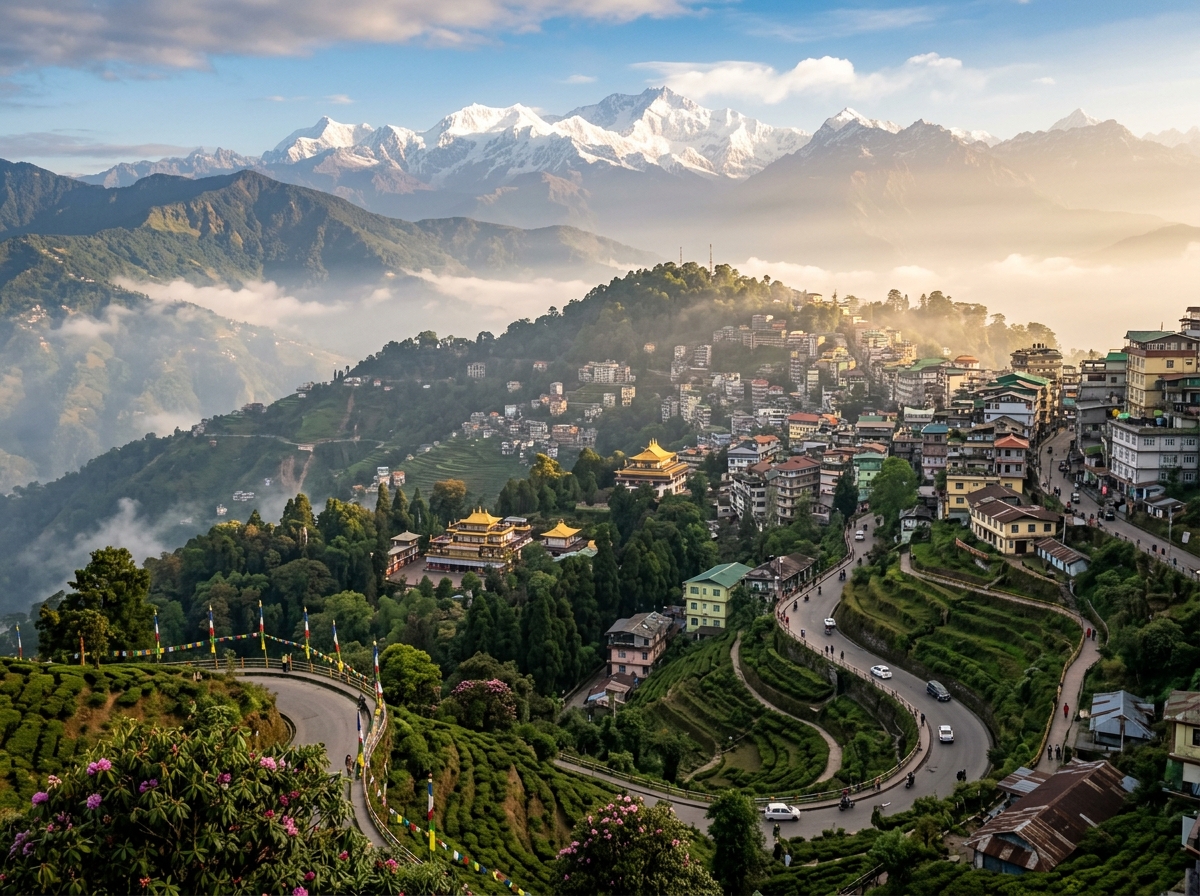
The Complete Travel Guide to Sikkim & Darjeeling: Tea Hills, Monasteries & Snow Peaks
Rising from the lush green foothills of North Bengal into the sky-piercing glacial heights of the Kanchenjunga range, the Eastern Himalayas represent one of India’s most awe-inspiring landscapes. Whether you are chasing golden sunrises over terraced tea gardens or seeking spiritual calm at ancient mountain monasteries, this circuit delivers pure wonder at every turn.
✨ Highlights of this Himalayan Circuit:
1. Namchi: The Sacred Hills & Samdruptse Colossus
Perched atop forested mountain ridges, South Sikkim’s cultural epicentre of Namchi is home to remarkable spiritual landmarks. Crowned by the awe-inspiring 135-foot golden statue of Guru Padmasambhava atop Samdruptse Hill, the town commands sweeping panoramic views over the winding river valleys and mist-blanketed hills.
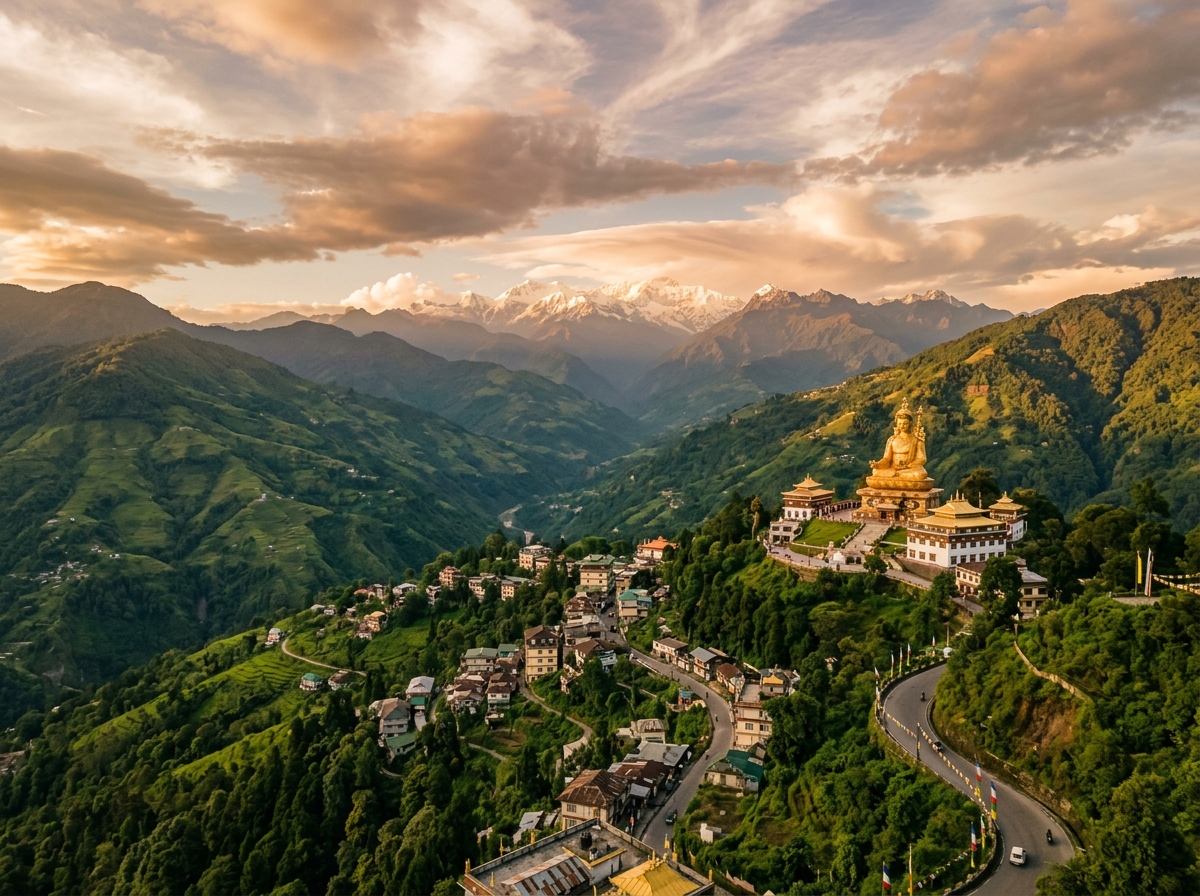
While in Namchi, don't miss Siddheshwar Dham (Char Dham) with its 87-foot Shiva statue and 12 Jyotirlinga replicas, as well as a tour through the sloping organic gardens of Temi Tea Estate.
2. The Untamed Alpine Valleys: Lachen & Lachung
Journeying northward reveals Sikkim’s most dramatic landscapes. Here, quaint wooden villages with colorful rooftops sit nestled along rushing glacial rivers, framed by towering snow-clad massifs. Lachen serves as the launchpad for the surreal Gurudongmar Lake at 17,800 ft, while Lachung opens the gates to the Yumthang Valley of Flowers and the snowfields of Zero Point.
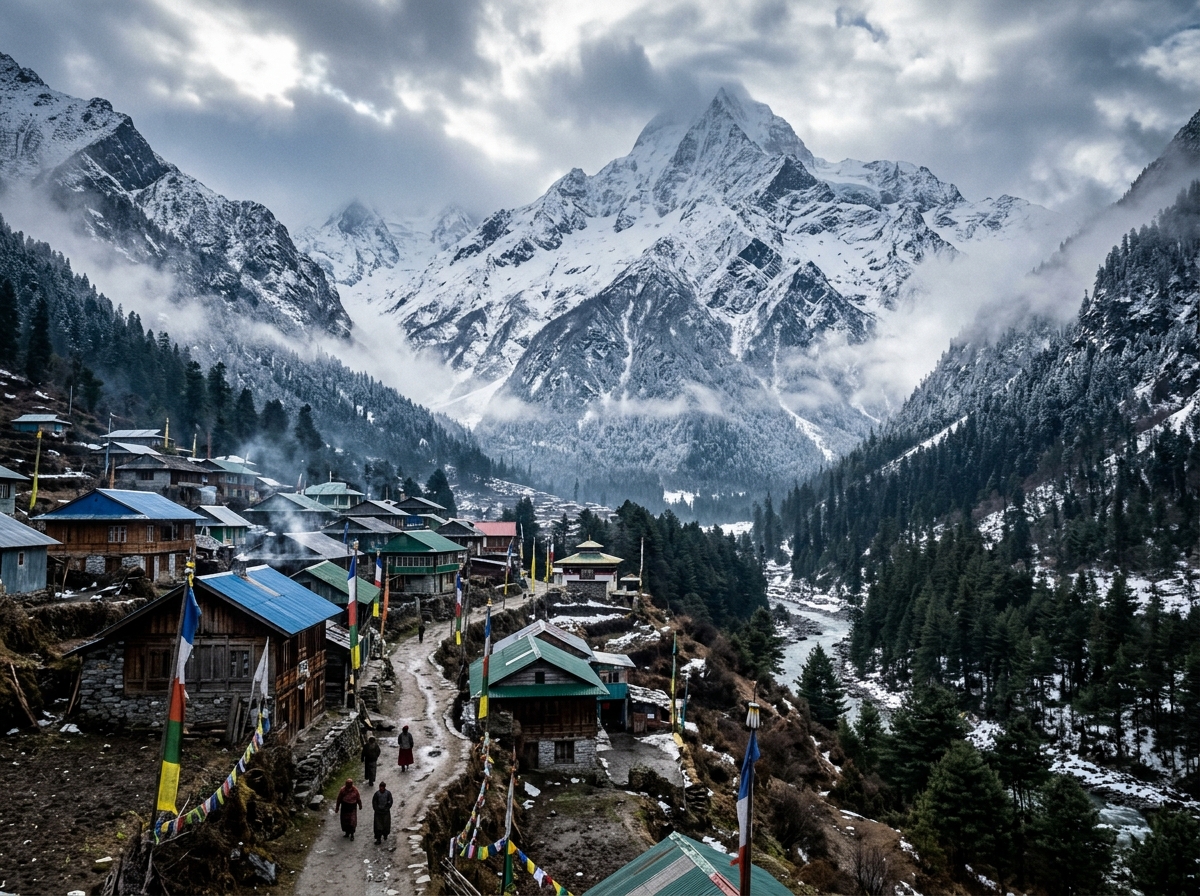
Special Protected Area Permits (PAP) are required for visiting North Sikkim. Ensure you arrange permits at least 24 hours in advance in Gangtok.
3. Sacred Monasteries & Front-Row Peak Panoramas
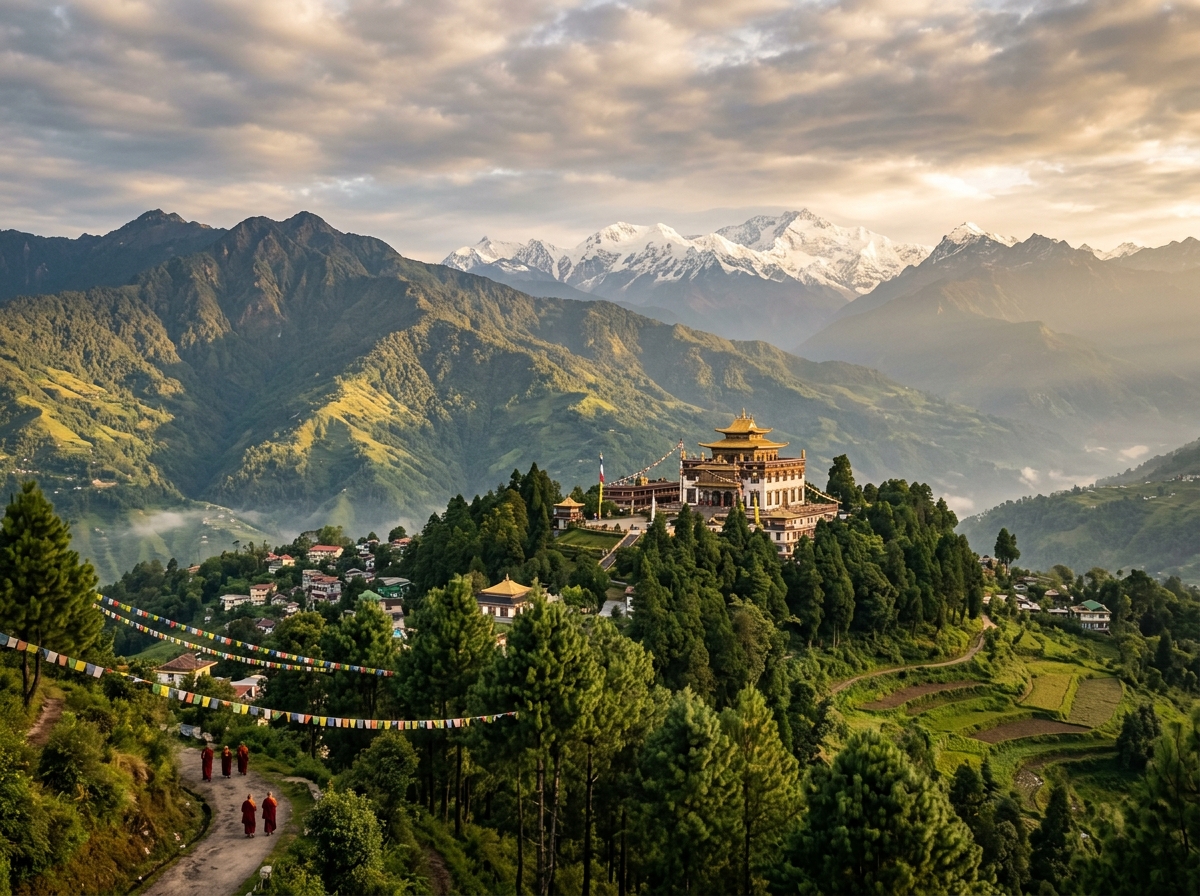
Few experiences match waking up to the sound of monastic horns echoing across the mist. Historic monasteries like Pemayangtse in Pelling, Rumtek near Gangtok, and Ralang in Ravangla stand on ancient mountain promontories, adorned with fluttering prayer flags and offering front-row seats to the Kanchenjunga range.
Best Seasons to Plan Your Trip
🌸 Spring (March – May)
Wild rhododendrons and orchids carpet the valleys; temperatures are comfortably mild for full-day sightseeing.
🍁 Autumn (October – November)
Unrivalled crystal-clear skies, razor-sharp mountain vistas, vibrant local festivals, and pleasant sunny days.
❄️ Winter (December – February)
Ideal for snow enthusiasts heading to Tsomgo Lake and Zero Point; crisp alpine mornings and cozy evenings.